
Find Gwinnett County Residents
Begin with the most exact item already known. A street address points first to the assessor and GIS. A full name plus an old address can lead to deeds, court dockets, business filings, probate, and newspapers. Voter information works best as an individual check, not as a broad browse. Each source proves only what its keeper records.
- Write the full name, address, phone number, date range, and spelling variants already known.
- Select the record tied most closely to the question, such as a parcel card for ownership or probate for an estate.
- Search the official index with the narrowest reliable field, then save the PIN, case number, or book and page.
- Read the underlying document when an image or file is available.
- Compare a second independent source and stop if names, dates, or addresses conflict.
- Ask the custodian for an offline file when the public portal does not show enough.
A record hit is not proof of current residence. Owners may receive mail elsewhere, court parties may have moved, and a business address may belong to an agent. The directory is useful when sources are compared without stretching what one result can show.
Gwinnett County Directory Offices
Several key custodians work at or near the Gwinnett Justice and Administration Center at 75 Langley Drive in Lawrenceville. The Clerk of Superior Court keeps deeds and many court files. Probate Court handles estates, guardianships, marriage records, and local birth or death certificates. The assessor maintains parcel data, while Elections has its own office and request rules.
The Gwinnett County services directory shown below routes readers to permits, GIS, deeds, inmate information, and code reporting.
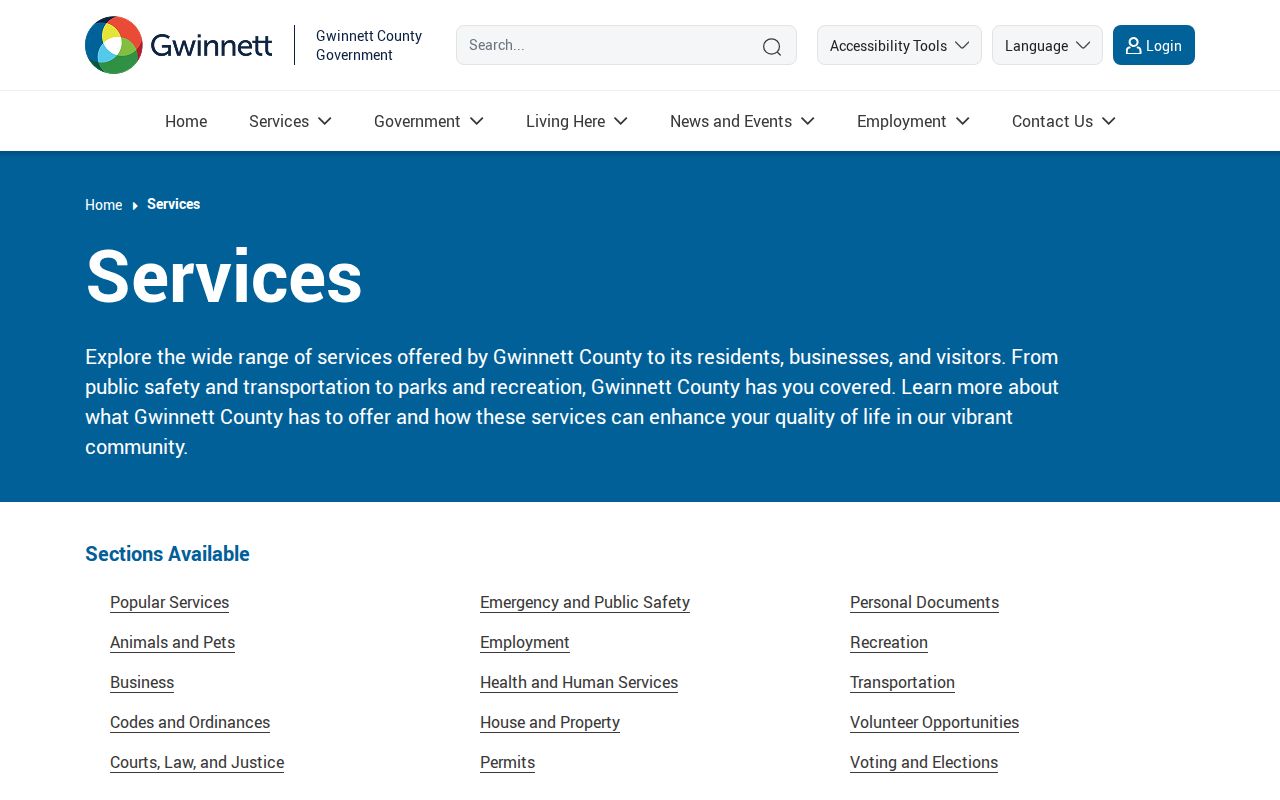
Use that hub to identify a department, but send court-file questions to the judicial clerk rather than the general county request portal.
Current Gwinnett Resident Records
Current public records are separate rolls with different purposes. The assessor is best for parcel ownership. Recorded deeds show transfers and legal descriptions. Courts show party roles and case events. Elections records confirm registration under statutory limits. Business and license portals identify public professional or corporate facts, not a home address.
| Record | What It Confirms | Keeper | Access |
|---|---|---|---|
| Parcel card | Owner, situs, mailing address, PIN, value | Board of Assessors | Free portal or office |
| Deed index | Parties, instrument, date, book/page | Clerk and GSCCCA | Remote index; office view free |
| Court docket | Party role, case type, events, status | Court clerk | Portal, re:SearchGA, or counter |
| Voter record | Individual registration and districts | Georgia SOS and Elections | MVP or lawful file order |
| Probate file | Decedent, estate representative, public heirs | Probate Court | Digital books and request |
| Business filing | Entity, agent, officer, filing status | Georgia SOS | Free index |
Official sources make corrections and explain missing or sealed material. Commercial compilations may merge names or repeat old addresses. Treat them only as unverified leads and return to the original custodian before relying on a claim.
Search Gwinnett Property Records
The assessor and GIS are the strongest address-first tools. Search by owner, property address, street, intersection, or parcel ID, then match the mapped parcel with the assessor card. Copy the situs address, tax mailing address, PIN, legal description, subdivision or lot reference, exemption clue, and deed citation under separate labels.
| Field | Use | Limit |
|---|---|---|
| Owner | Locate parcels under an indexed name | Does not list a household |
| Property address | Find the physical parcel | May differ from mailing address |
| PIN | Keep one tract consistent | Copy every component |
| Street or intersection | Orient a block in GIS | Map is not a survey |
| Legal description | Match deeds and plats | Old records may omit modern streets |
The Gwinnett assessor page appears in the successful manifest image below.
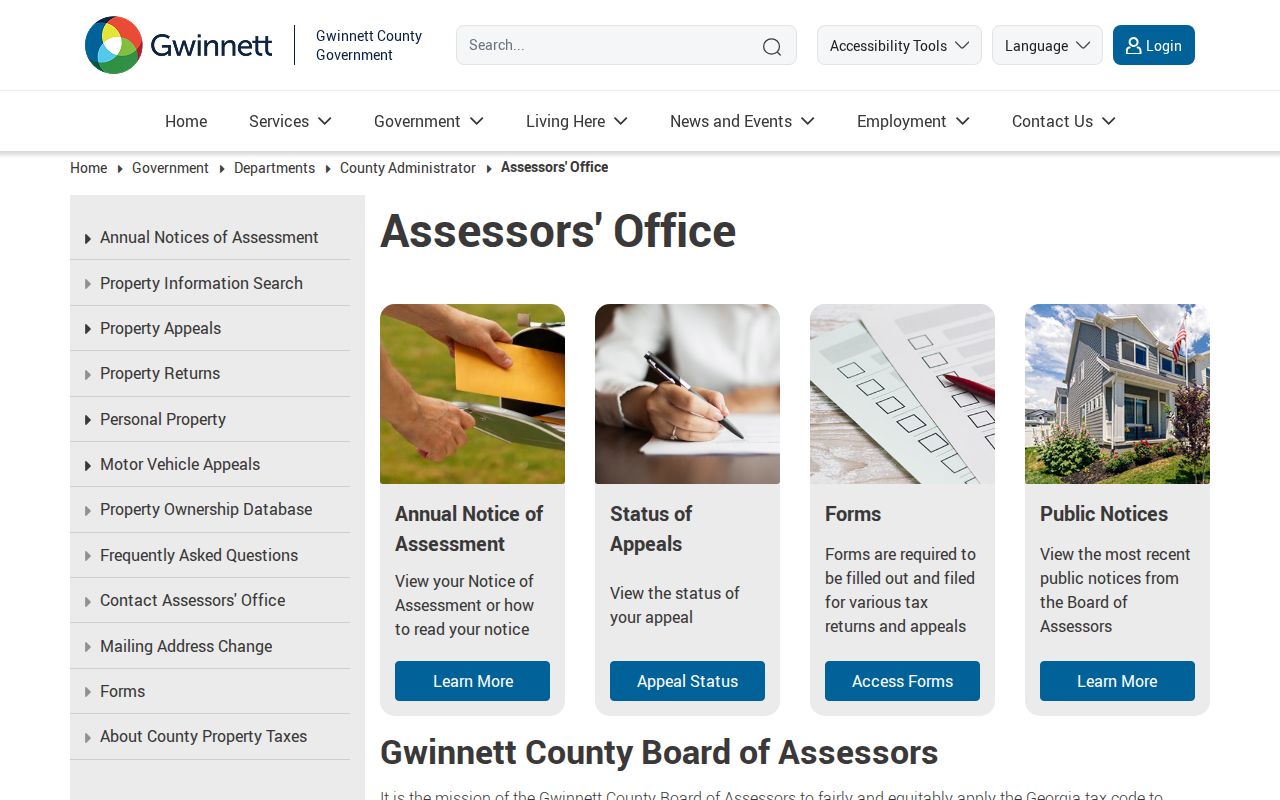
A mailing address shows where tax correspondence goes. It may support an absentee-owner inference, but it does not prove who occupies the parcel.
Gwinnett Deeds Start in 1871
The Clerk of Superior Court states that land records begin September 26, 1871 because former courthouse records were lost by fire. Search a current acquisition deed, note grantor, grantee, legal description, and prior deed reference, then move backward one transfer at a time. A grantor conveys an interest. A grantee receives it.
GSCCCA offers remote statewide indexes and images for a fee, while the clerk says office searching and viewing are free. Copies cost $2.50 for the first page and $1 for each later page under the current FAQ; a large plat print is $10. Since January 1, 2025, real-estate documents have required electronic filing, but that change did not end public inspection.
The GSCCCA search hub is shown in the manifest image.
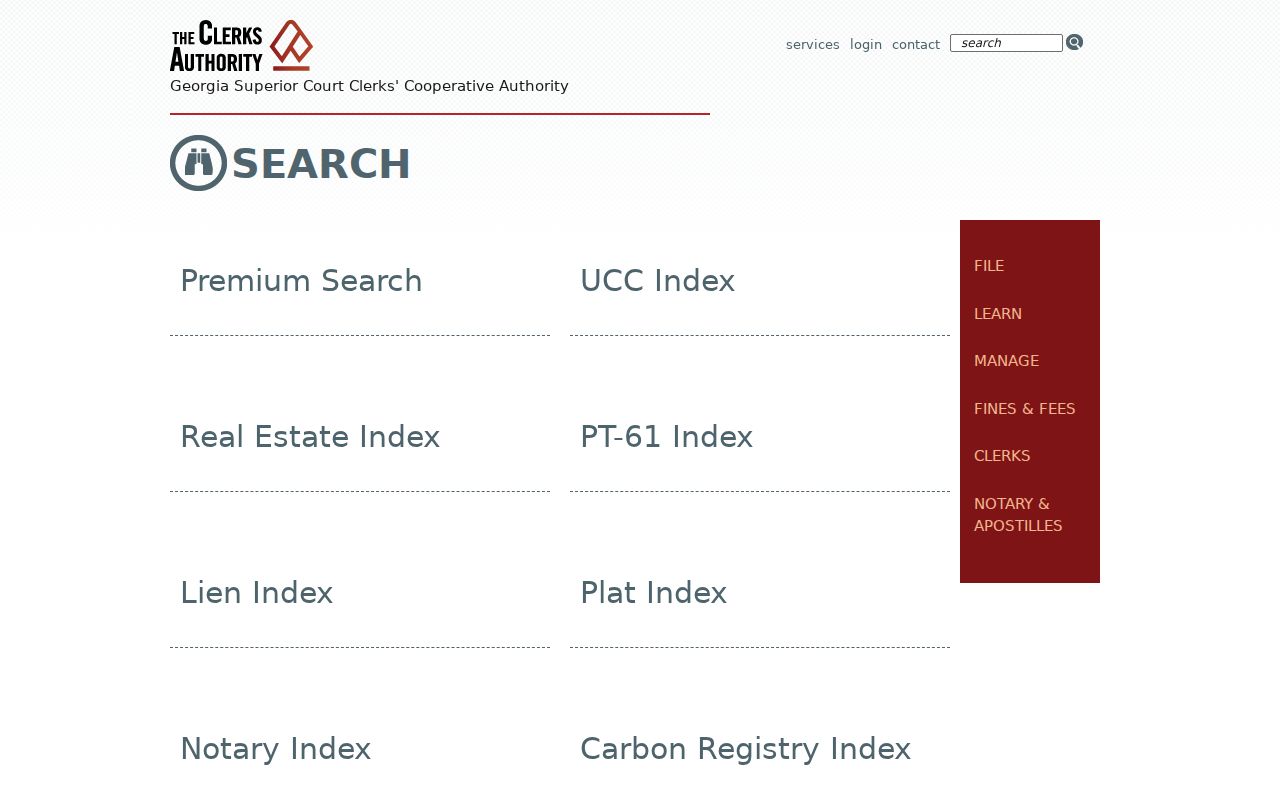
When the chain reaches the fire boundary, pivot to Georgia Archives cards, tax and probate material, newspapers, church or cemetery records, and family manuscripts. Earlier evidence can survive outside the continuous clerk series.
Verify Gwinnett Court Parties
The Gwinnett Courts Portal covers Superior, State, Magistrate, and Probate estate matters, while Recorder’s Court has a distinct search. A party name, case number, category, or date range can narrow results. A docket may show court, case type, filed date, party roles, judge, events, hearing dates, status, and document links.
A court appearance is not proof of current residence, and a complaint is not a finding. Confirm a common name with a middle initial, date range, known address, case number, or another record. Sealed, juvenile, adoption, and protected material will not appear. The clerk counter remains the source for official files, copies, and certifications.
The Gwinnett Courts portal hub appears below.
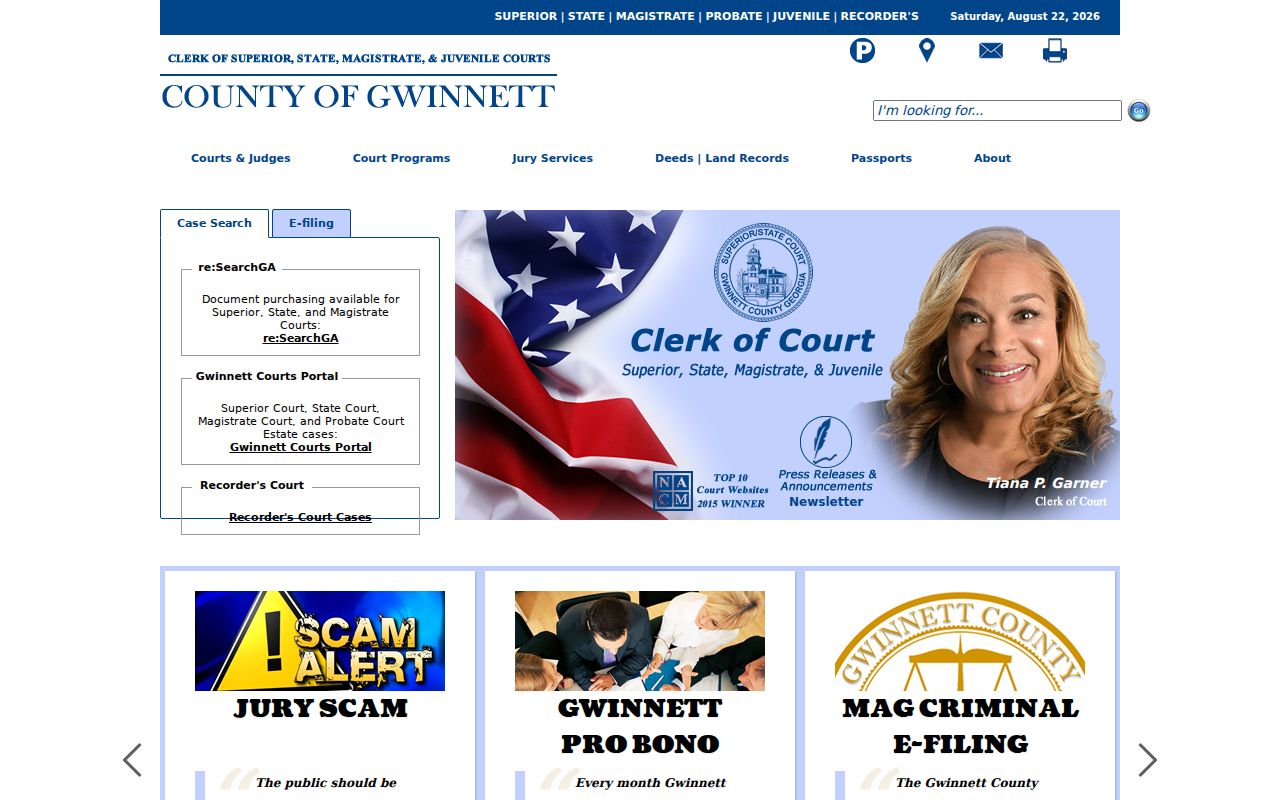
Use re:SearchGA when a purchasable document is needed, or ask the clerk whether an older file is archived before visiting.
Gwinnett Voter Lookup Boundaries
Georgia My Voter Page is an individual verification tool. It asks for first initial, last name, county, and date of birth, then returns that person’s registration and election information. It is not a street or neighborhood browse. Georgia also has open primaries and does not register voters by party. A primary-participation field never reveals ballot choices.
The separate voter-list ordering channel can provide geographic products under O.C.G.A. §§ 21-2-225 and 21-2-225.1. Sensitive fields are withheld, commercial use is prohibited, and protected residences are suppressed. The Georgia My Voter Page shown below should be used only for its stated one-voter task.
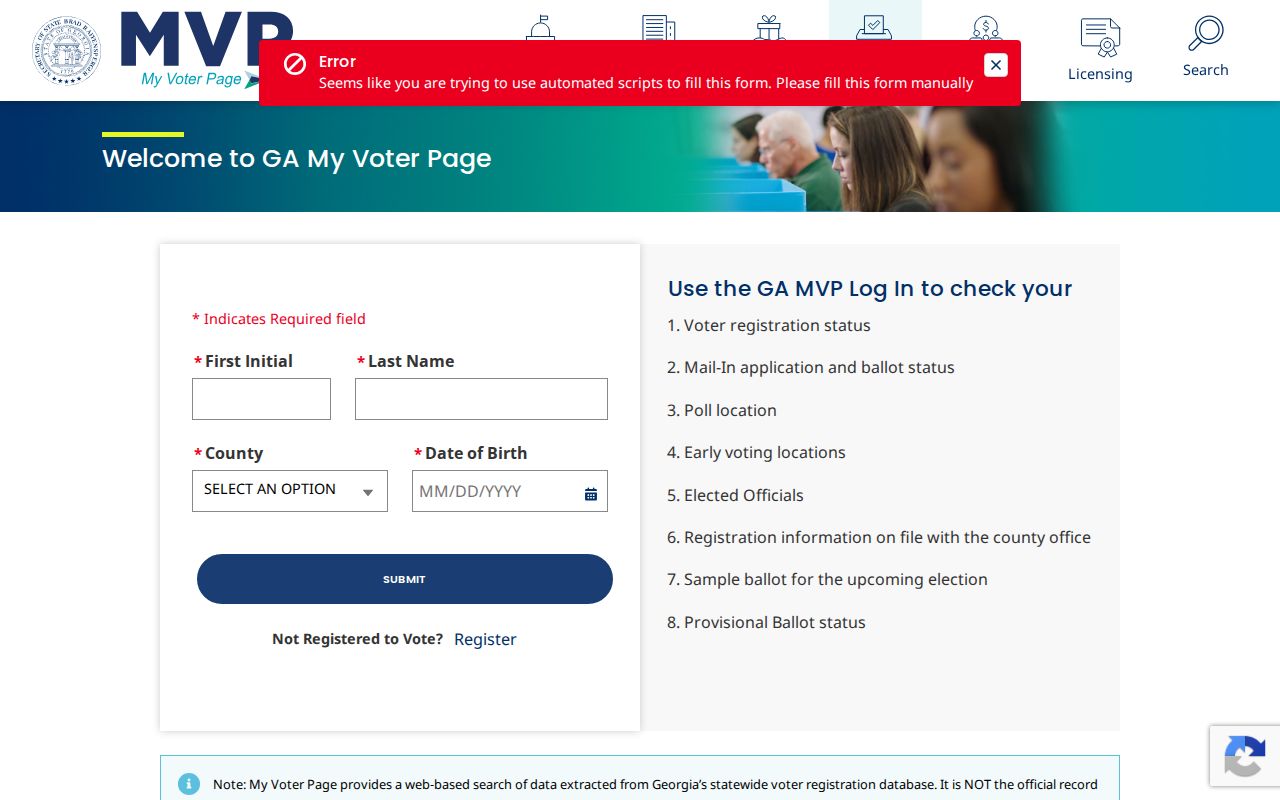
No voter source should be described as a complete list of Gwinnett County residents. Children, nonvoters, and protected people are among those it cannot enumerate.
Gwinnett Probate and Vital Records
Probate files can connect a deceased person with an estate representative or heirs in public filings. Archived books and indexes are available online, while larger file requests may require advance notice. Marriage certificates are obtained from the county that recorded them. Birth and death certificates follow eligibility and identification rules rather than a universal date when all records become public.
Georgia DPH holds statewide birth and death records from 1919 and marriage records for 1952 through 1996. Gwinnett Probate handles local certificates and marriage records outside the state marriage span. The Georgia vital-record request route appears below.
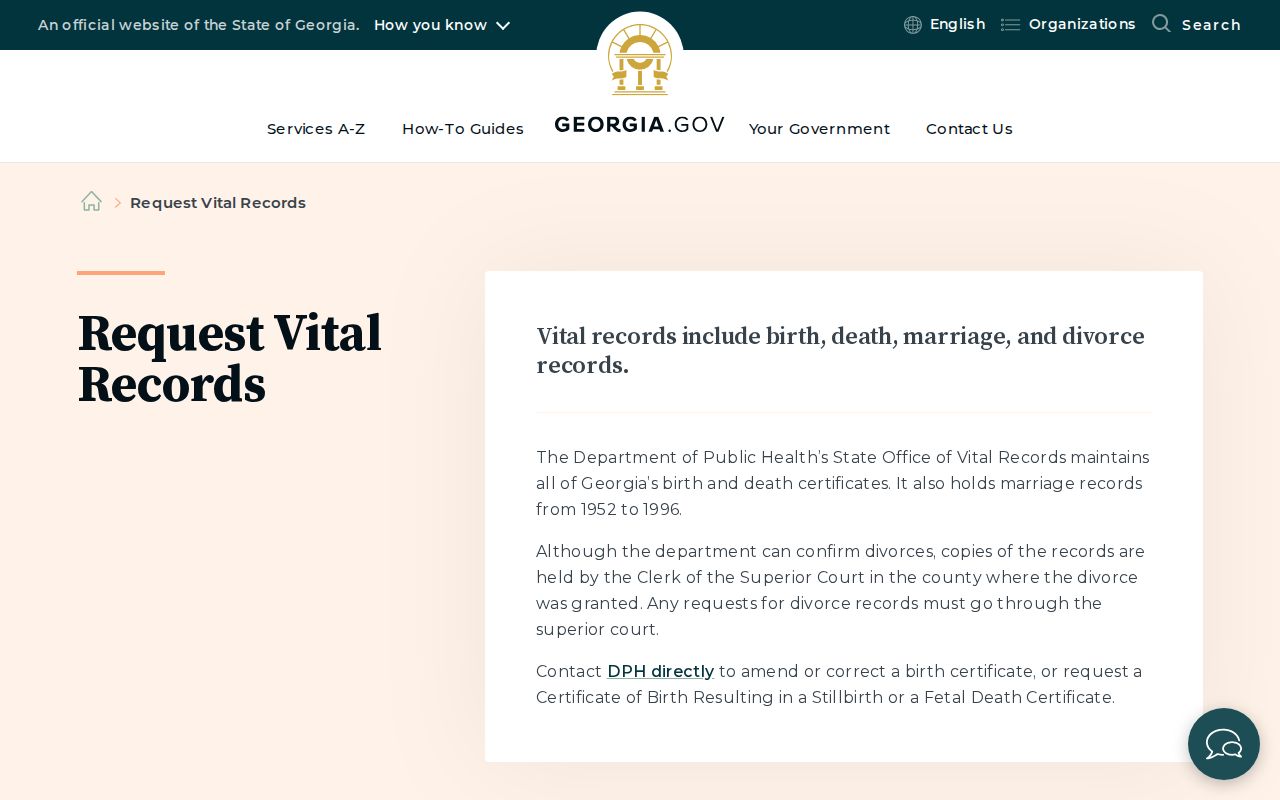
A certified certificate is not the same as a public historical index. Eligible requesters must use the current form, valid ID, fee, and correct state or county custodian.
Confirm Gwinnett Business Names
A business filing can distinguish two people with the same name or connect someone to a public corporate role. Georgia’s Corporations Division accepts searches by business name, control number, registered agent, or officer. Results may show entity status and filing details. A registered-agent address can be a law office or service address, so it is not proof of residence.
The Georgia Business Search shown below is free to query.
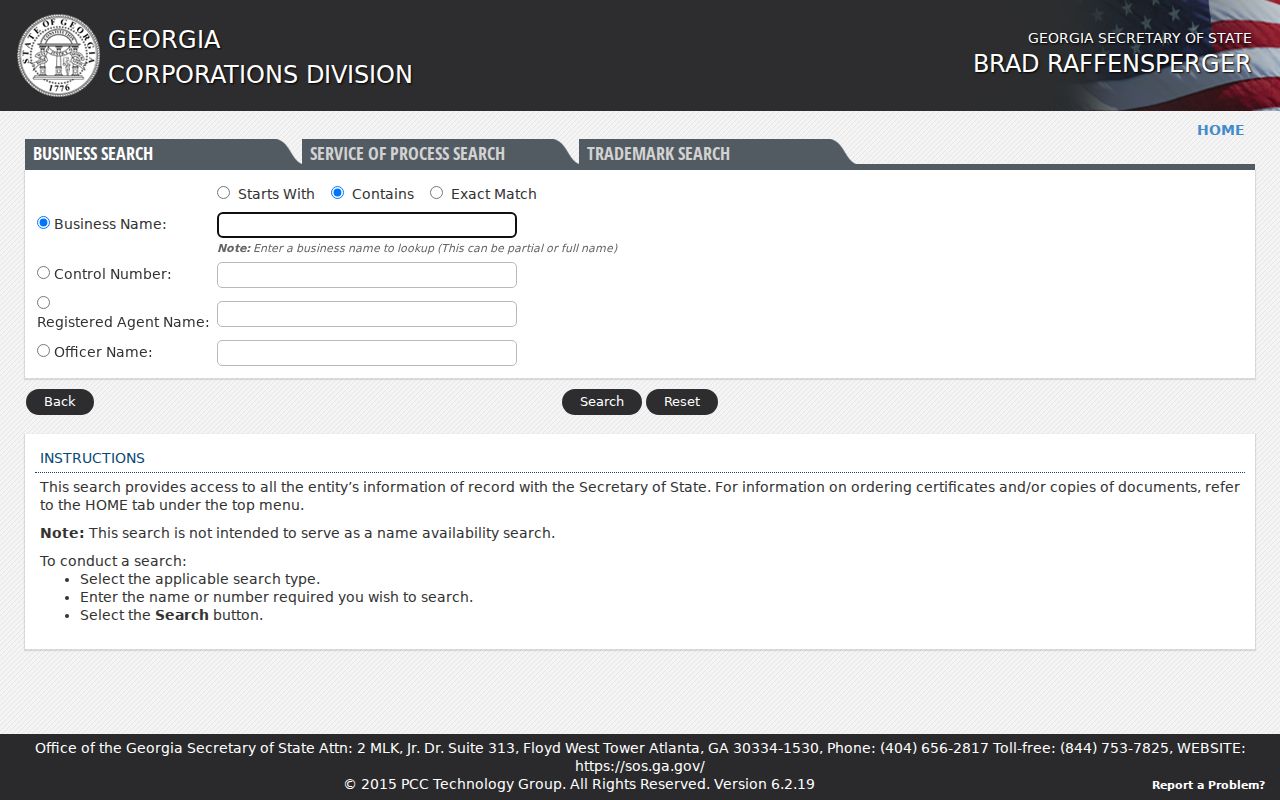
Gwinnett trade names are filed through the Superior Court clerk, while unincorporated county business-license records may require a service-portal search or focused records request. Keep a public business location distinct from a home.
Request Gwinnett County Records
The Georgia Open Records Act, O.C.G.A. §§ 50-18-70 through 50-18-77, generally requires production or a response within three business days. An agency does not have to create a new list. A useful request asks for existing records, names the department and record type, gives an address or PIN, supplies inclusive dates, and requests the desired electronic format.
Gwinnett County’s portal covers executive departments such as Planning and Development, Police, Transportation, Water Resources, Tax, and Elections. It expressly excludes Superior, State, and Magistrate clerk files. Those requests go to the judicial clerk. The county open-records page below makes that split clear.
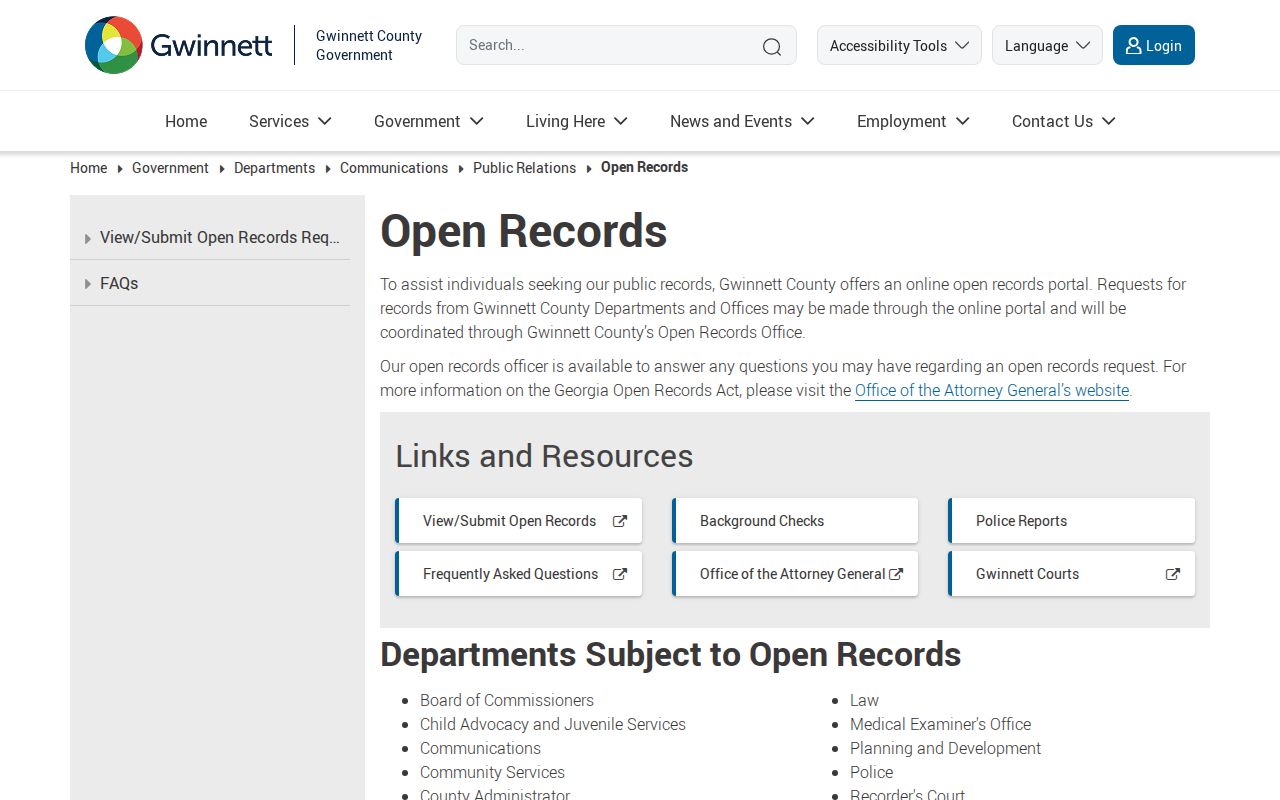
If an agency cannot produce the record in three business days, it should identify responsive records and give a timetable. Fees may cover search, retrieval, redaction, and production under the Act.
Historical Gwinnett Resident Directories
Gwinnett County Public Library keeps census microfilm for 1820 through 1920, except the destroyed 1890 schedule. Its local newspaper chronology begins with the Weekly Gwinnett Herald in June 1871 and runs through later titles into current catalog holdings. Readers can print, save to USB, or email microfilm images, and staff accept targeted article or obituary requests.
Ancestry Library Edition is available in the library, while HeritageQuest provides remote census and family-history access through credentials. The Library of Congress has verified Southern Bell telephone-book scans serving Gwinnett exchanges from 1968 through 1977 examples. GHS preserves town binders, church directories, family files, maps, and government material at the Historic Courthouse.
A telephone listing may show a name, compressed street, postal locality, and number, but it does not name every adult or prove ownership. Record the edition date, exact abbreviation, page, and nearby text before comparing it with another year. A missing entry may reflect a move, death, name change, unlisted telephone, or new exchange boundary. Census, deed, probate, and newspaper evidence can separate those possibilities.
Town context also matters. Railroad development gave Norcross, Duluth, Suwanee, Buford, Lilburn, Lawrenceville, and Dacula distinct newspaper and telephone trails. A household can appear under a new exchange or postal community without leaving Gwinnett County. The Gwinnett County city directories collection explains the historical shelf and how to read its locality keys.
Gwinnett Postal Names and Cities
Lawrenceville, Norcross, Duluth, Atlanta, and other mailing names can cover land outside the matching city. ZIP Codes are USPS delivery areas, not city or county boundaries. Border codes also cross into Hall, Jackson, Forsyth, Walton, and DeKalb contexts. Use USPS to verify delivery and county GIS to determine the actual jurisdiction.
This matters most for municipal permits, code files, and local clerk records. Incorporated property may be served by a city, while unincorporated land usually routes to Gwinnett Planning and Development. County deeds and taxes remain countywide. Never choose a records office from the postal city alone.
- Parcel
- A mapped unit of land with its own county identifier.
- Situs address
- The physical location of the parcel.
- Mailing address
- The address used for owner correspondence.
- Index
- A finding aid that points to a full record or image.
- Criss-cross directory
- A historical directory arranged by address or phone rather than surname.
Use Gwinnett Records Lawfully
Public access does not authorize stalking, threats, harassment, impersonation, account access, or attempts to defeat a protected-address program. Georgia Safe at Home provides eligible survivors with a substitute address and mail forwarding. Voter law also protects qualifying addresses, while other statutes require redaction of sensitive identifiers.
Scams are another reason to return to original sources. Deed-copy sellers may charge far more than the clerk, false property alerts can mimic officials, and callers may pose as deputies seeking immediate payment. Verify a message through a known county telephone number, not the contact details supplied in the demand. A filing alert is a prompt to inspect the real instrument, not proof that a filing is valid or fraudulent.
Check each fact with the custodian before acting on it. Names can be shared, old addresses linger, and portal data can change. Use the Gwinnett County residents directory for lawful family research, estate work, reconnection, civic transparency, property history, and scam checks.