
Gwinnett Directory Sources by Era
No official catalog proves that an exhaustive Polk or criss-cross city directory run exists for Gwinnett County. The verified shelf is broader and more useful when its parts are kept distinct. The Gwinnett County Public Library microfilm collection supplies census and local newspaper evidence. Licensed databases add census, directories, and family-history books. The Gwinnett Historical Society preserves town, church, school, cemetery, family, and government material.
| Collection | Years | Where Held | Access |
|---|---|---|---|
| Gwinnett census microfilm | 1820-1920, except 1890 | GCPL | Library microfilm |
| Federal census | Public through 1950 | NARA, Ancestry, HeritageQuest | Online or library access |
| Southern Bell telephone books | Verified examples, 1968-1977 | Library of Congress | Free scans |
| Local newspapers | June 1871 into current catalog holdings | GCPL | Microfilm and requests |
| Town and church collections | Collection-specific | GHS Historic Courthouse archive | Public and member access varies |
This coverage table is a finding map, not a claim that every resident appears. Telephone service could be unlisted or held in another household member’s name. A census has a fixed enumeration date. Church and civic lists reflect voluntary membership. Each gap needs a second source.
Reading Gwinnett City Directory Entries
The verified digital spine consists of metropolitan Southern Bell telephone books rather than classic occupation-rich city directories. Confirmed editions cover Gwinnett-serving exchanges in 1968, 1971, 1972, 1975, 1976, and 1977. A typical entry may show surname, given name or initials, a courtesy title, house number, compressed street name, an abbreviated locality, and a telephone number. It does not consistently identify a spouse, occupation, owner or renter status, or every adult at the address.
The 1968 Southern Bell scan illustrates why the locality key matters before any name is assigned to a town. The related Georgia Archives research portal appears in the successful manifest image below.
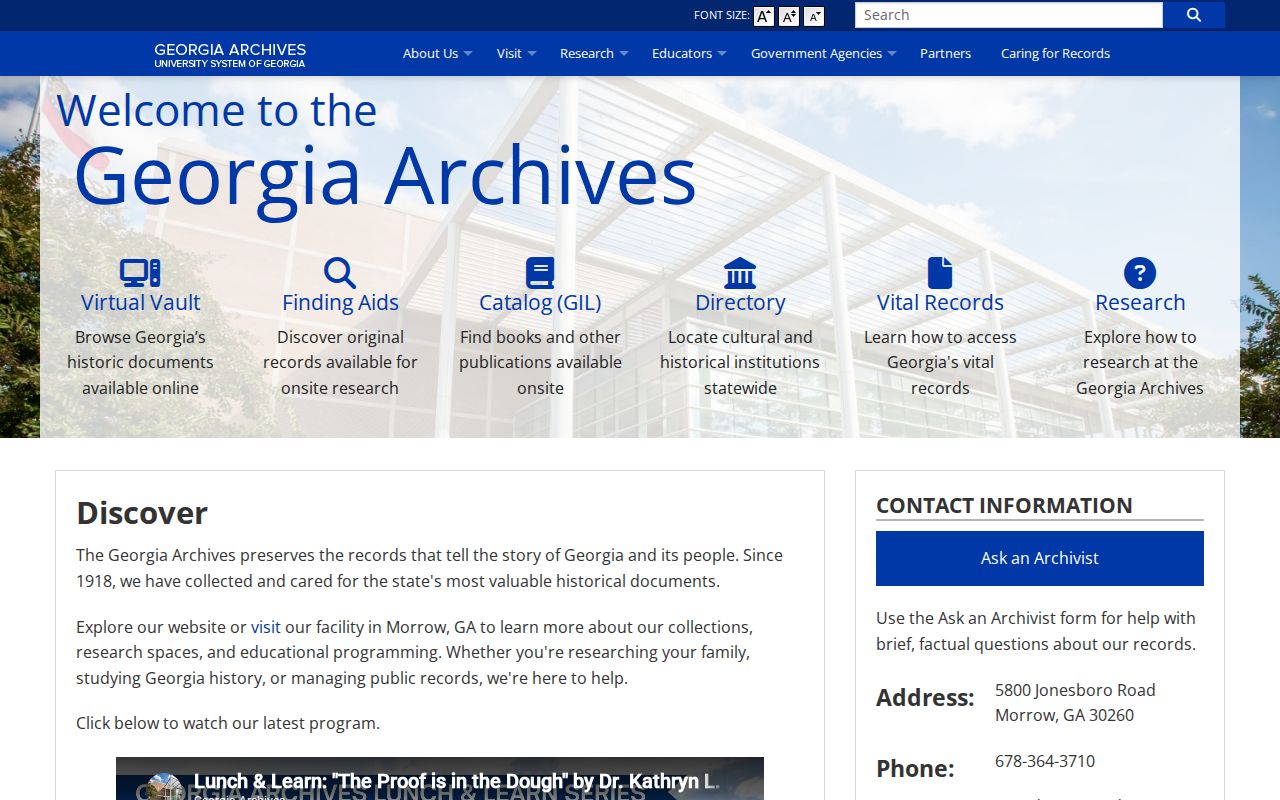
Georgia Archives is a useful next stop when a printed abbreviation or old place name cannot be resolved through the directory alone.
| Entry element | What to record |
|---|---|
| Name | Exact spelling, initials, title, and suffix |
| Address | House number and compressed street exactly as printed |
| Locality | Printed code plus the volume’s own key |
| Telephone | Full number and any continuation mark |
| Context | Edition title, publication date, page, and nearby text |
- Criss-cross directory
- A volume arranged by street or phone number instead of surname.
- Householder index
- An address-based list naming a household contact, where an edition includes one.
- Abbreviation key
- The book’s guide to shortened street and locality names.
Gwinnett Library Directory Routes
GCPL offers three different routes, and their access rules matter. Ancestry Library Edition is for in-library use with a library barcode and PIN. It covers census schedules, directories, photographs, and other genealogy material. HeritageQuest is available remotely through GALILEO with library credentials and includes indexed census records, pension files, and local or family histories.
The GCPL Ancestry Library Edition page appears in the successful manifest capture below.
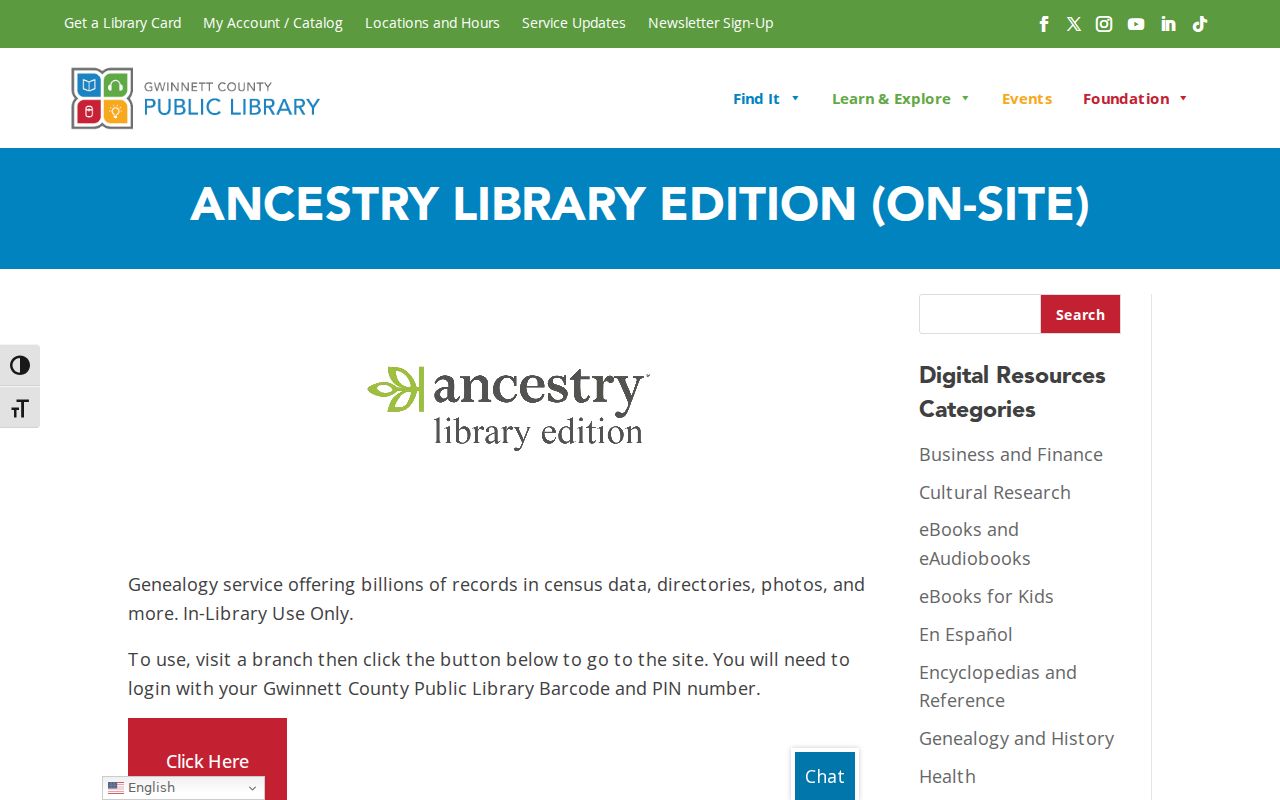
This library-only route can reveal directory editions and census sources that are not freely searchable from home.
The microfilm desk serves readers who need local evidence outside a city directory. Staff offer Book-a-Librarian appointments and targeted article or obituary requests. The reader can print a page, save it to a USB drive, or email an image. That last option is valuable when faint type needs close review at home.
The GCPL holdings page is shown in the successful manifest image below.
The published chronology lets a researcher choose a newspaper and date range before asking staff for help.
Gwinnett Directory Newspaper Timeline
Local papers fill the years when no verified household directory is at hand. They can connect a directory name to an obituary, legal notice, marriage, school event, club item, or business address. Coverage overlaps, so a single year may call for more than one title.
| Run | Verified GCPL span | Best use |
|---|---|---|
| Weekly Gwinnett Herald | Jun 1871-Dec 1897 | Notices and early county names |
| News Herald | Jul 1894-Jan 1965 | Obituaries and community news |
| Gwinnett Journal | 1902-1905 and 1906-1943 | Household events and legal notices |
| Buford Advertiser | Aug 1917-Feb 1964 | Buford people and places |
| Daily News to Daily Post | Feb 1965 onward, with title changes | Modern local context |
The chronology begins soon after the courthouse fire and reaches into current catalog holdings. That span does not erase gaps within a title, but it gives Gwinnett County family researchers an unusually clear plan for selecting microfilm.
Gwinnett Historical Society Directories
The Gwinnett Historical Society archive holds more than 1,600 publications along with family files, maps, photographs, microfilm, and records of churches, cemeteries, schools, and local government. Its room in the Historic Gwinnett County Courthouse is open Monday, Wednesday, and Friday from 10 a.m. to 2 p.m. Public and member access differs by collection, so contact staff before a visit.
The successful manifest capture below shows the GHS archive’s public entry point.
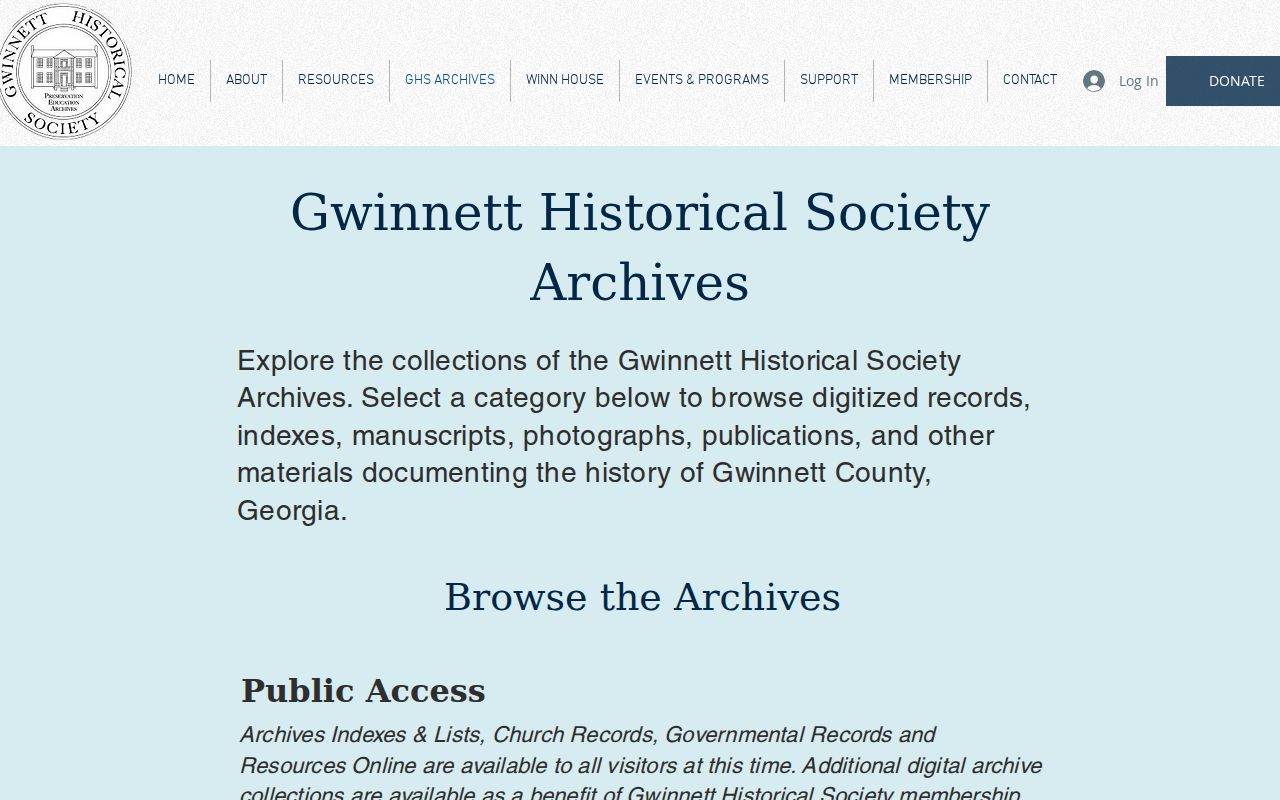
The archive can bridge a printed listing to a town binder, family file, church record, map, or government series without pretending that those sources form one complete resident roll.
The GHS indexes and lists name binders for Early Lawrenceville; Auburn, Buford, and Centerville; Dacula; and Duluth, Grayson, Lilburn, and Loganville. They also cover 4-H, business cards, postcards, church material, and government records.
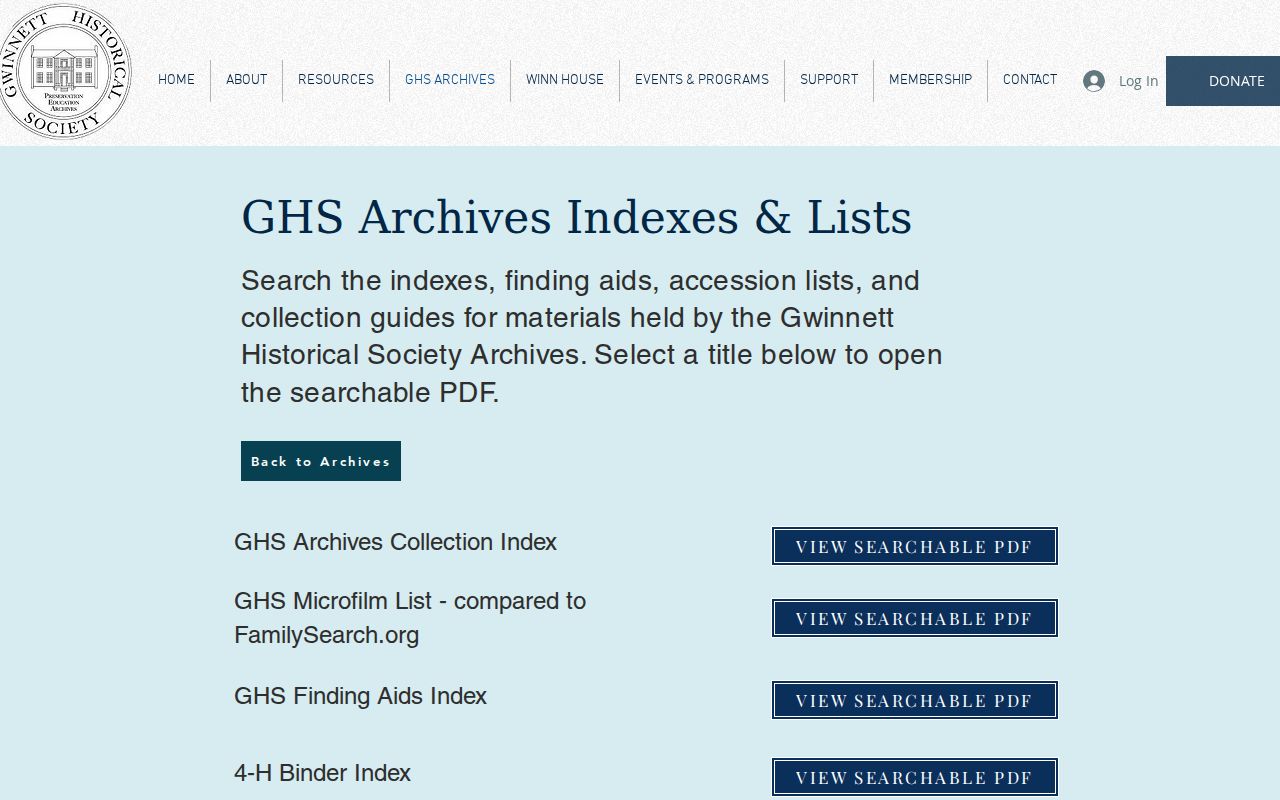
These finding aids narrow a request to the place, surname, congregation, or subject most likely to hold the next clue.
Gwinnett Church Directory Runs
First United Methodist Church of Lawrenceville has a rare verified sequence in the GHS index: directories for 1966, 1973, 1978, 1983-84, 1995-96, 1996-97, 1999, and an undated edition. These consent-based community lists can help bridge the space between public census years and telephone books.
Use the series as historical evidence, with care for living people. A missing name may mark a move, a choice not to join, a new congregation, or an incomplete surviving volume. It is not proof that the family left Gwinnett County. School, cemetery, and town binders can test the same interval.
Note: Church directories document a participating community, not every person who lived inside the congregation’s postal area.
Trace Gwinnett Families Across Years
A sound city directory trail preserves the source as carefully as the name. Start in the closest known year. Move outward one edition at a time, and use independent records whenever the listing changes. Do not assume that an alphabetical neighbor lived on the same physical block.
- Copy the full listing, page, edition date, locality code, and abbreviation key.
- Repeat the search in the prior and next available telephone book or directory.
- Pair the address with the nearest public census year and read the household plus enumeration order.
- Search the matching GCPL newspaper run for obituaries, notices, school news, and address context.
- Test ownership in deeds or tax records, while keeping owners distinct from occupants.
- Record conflicts instead of forcing two similar names into one identity.
The 1890 federal schedule is absent because it was largely destroyed nationwide. Bridge 1880 to 1900 with deeds, probate, tax material, newspapers, church or cemetery records, and any verified directory edition. The National Archives census guidance explains federal access and the 72-year release rule.
Decode Gwinnett Directory Place Names
Telephone exchange, postal locality, and city boundary are three different kinds of geography in Gwinnett County. A compressed Lawrenceville, Lilburn, Norcross, or Duluth code identifies the directory’s service context. It does not prove that the street lay inside that city’s legal limits. Annexation and county growth make the distinction more important in later research.
Preserve the code exactly, consult the volume key, and then compare the address with county GIS or parcel evidence. Rail lines also shaped separate town trails around Norcross, Duluth, Suwanee, Buford, Lilburn, Lawrenceville, and Dacula. A family can seem to change communities when the exchange or postal label changed around it.
For present address-keyed research after the historical trail is set, move to the Gwinnett County street directory.
Limits of Gwinnett City Directories
No verified source establishes a complete Gwinnett County Polk series, dedicated criss-cross shelf, or sample entry with occupation and spouse fields. The confirmed Southern Bell books are valuable, but they are telephone directories. They omit unlisted numbers, people without service, and many adults within a household. Some listings use another person’s name.
A disappearance can mean death, a move, marriage, a new surname, an unlisted telephone, or an exchange-boundary change. Treat it as a prompt to search the next source. GCPL newspapers, census schedules, probate files, deeds, and GHS collections can explain what the city directory alone cannot.